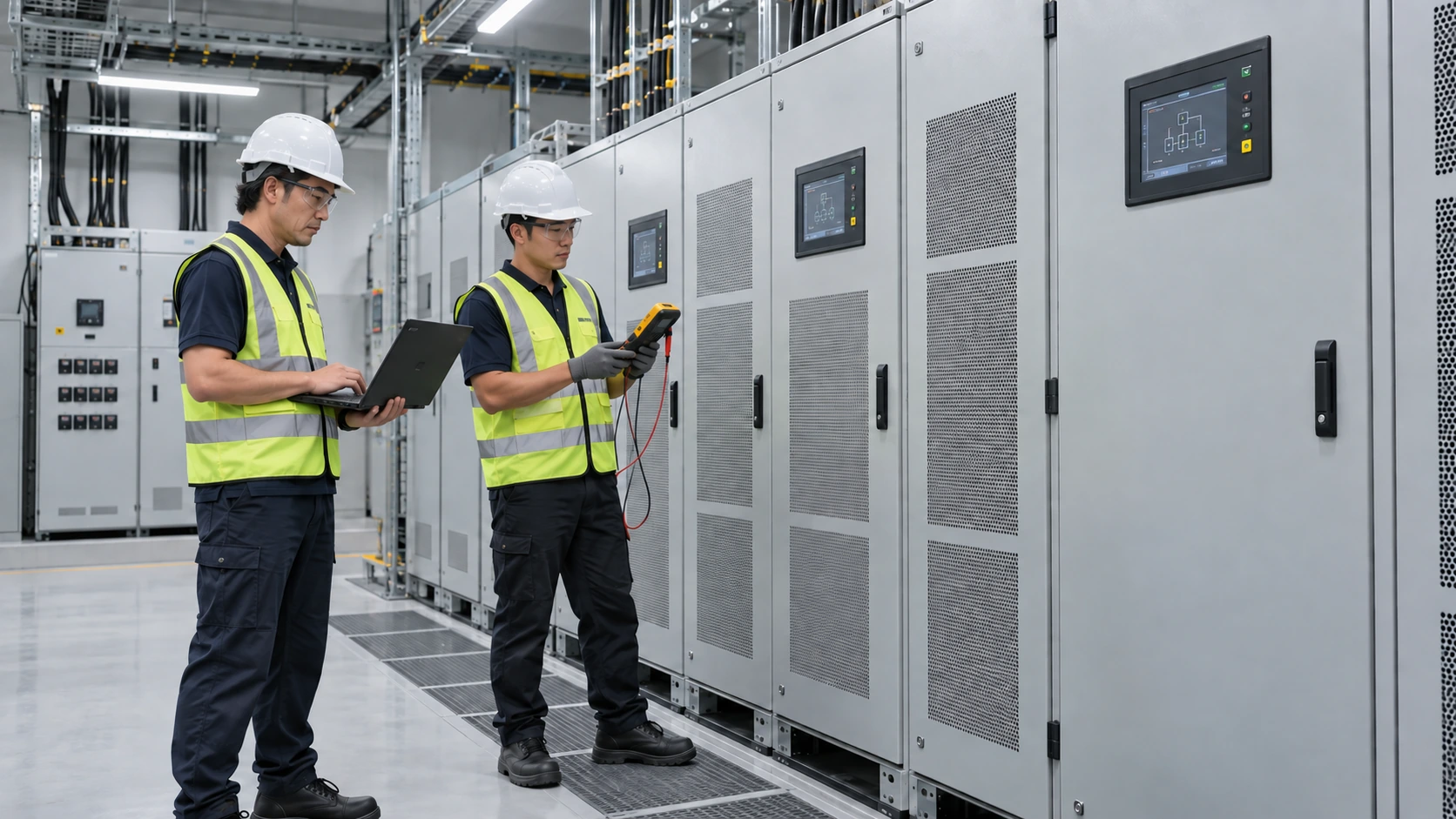
Safety
Safety begins before a component is purchased and continues through design, manufacture, testing, installation, commissioning and after-sales service.
A complete safety chain
Improving safety at every stage of an Avatec project
Avatec applies safety as a continuous engineering and operational process. Each stage builds on the one before it: qualified suppliers provide suitable components, the design controls known hazards, manufacturing follows controlled work practices, testing confirms protection and operation, and site teams install and maintain the system using approved procedures.
01 · Supply and engineering
Safe products start with responsible selection
Supplier and component qualification
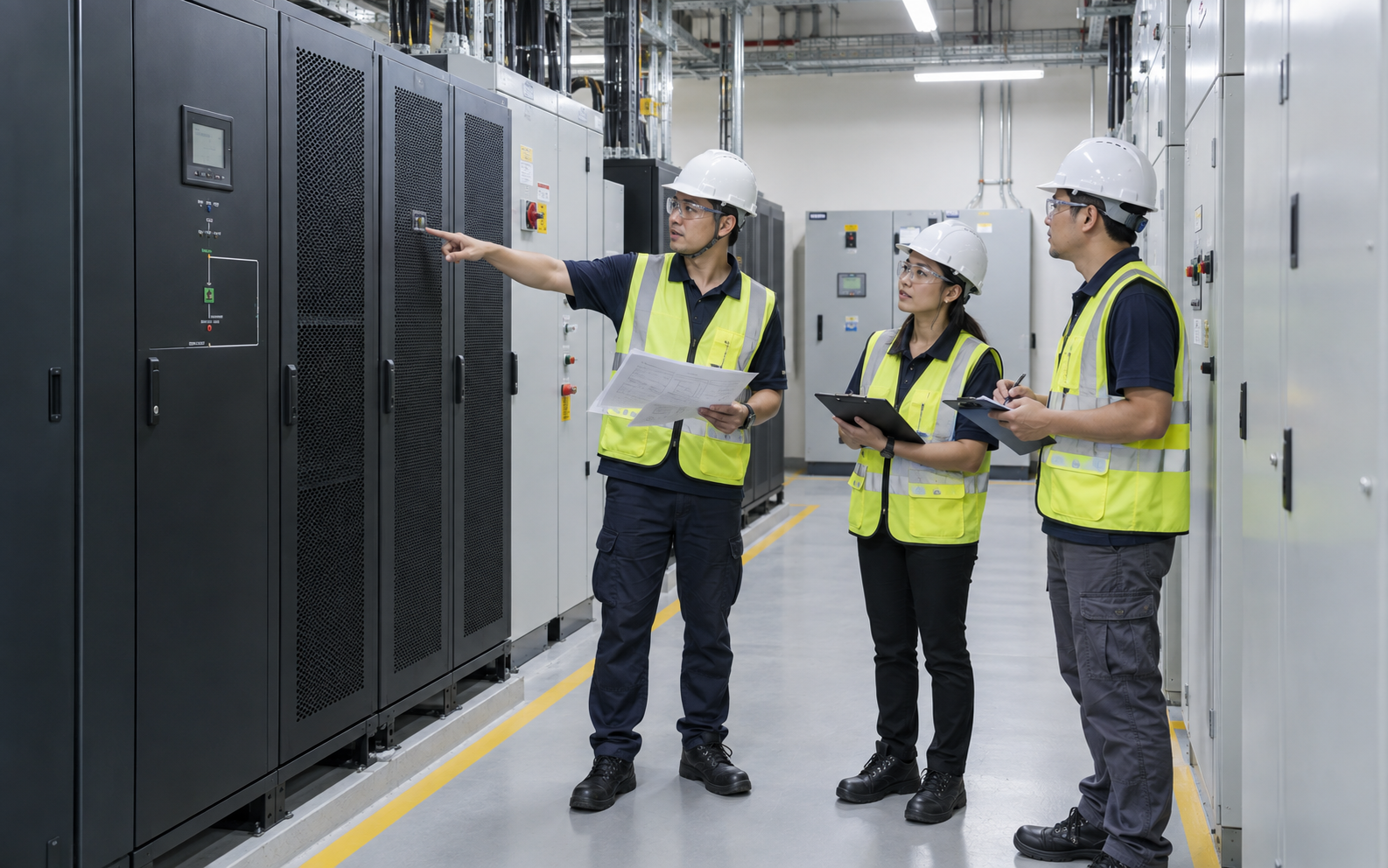
Suppliers are assessed for technical capability, product consistency, traceability, documentation and their ability to support the equipment throughout its service life. Safety-critical devices—including protective components, cables, terminals, fans, contactors, circuit breakers and control equipment—are selected for the electrical duty and environmental conditions.
Product and system selection
The selected UPS, inverter, charger, battery or distribution system is matched to load, fault level, autonomy, temperature, ventilation, ingress protection, maintenance access and site classification. Design reviews consider electric shock, stored energy, short circuit, thermal stress, fire, mechanical handling, battery chemistry and foreseeable misuse.
02 · Factory control
Safe manufacturing and a safe workplace
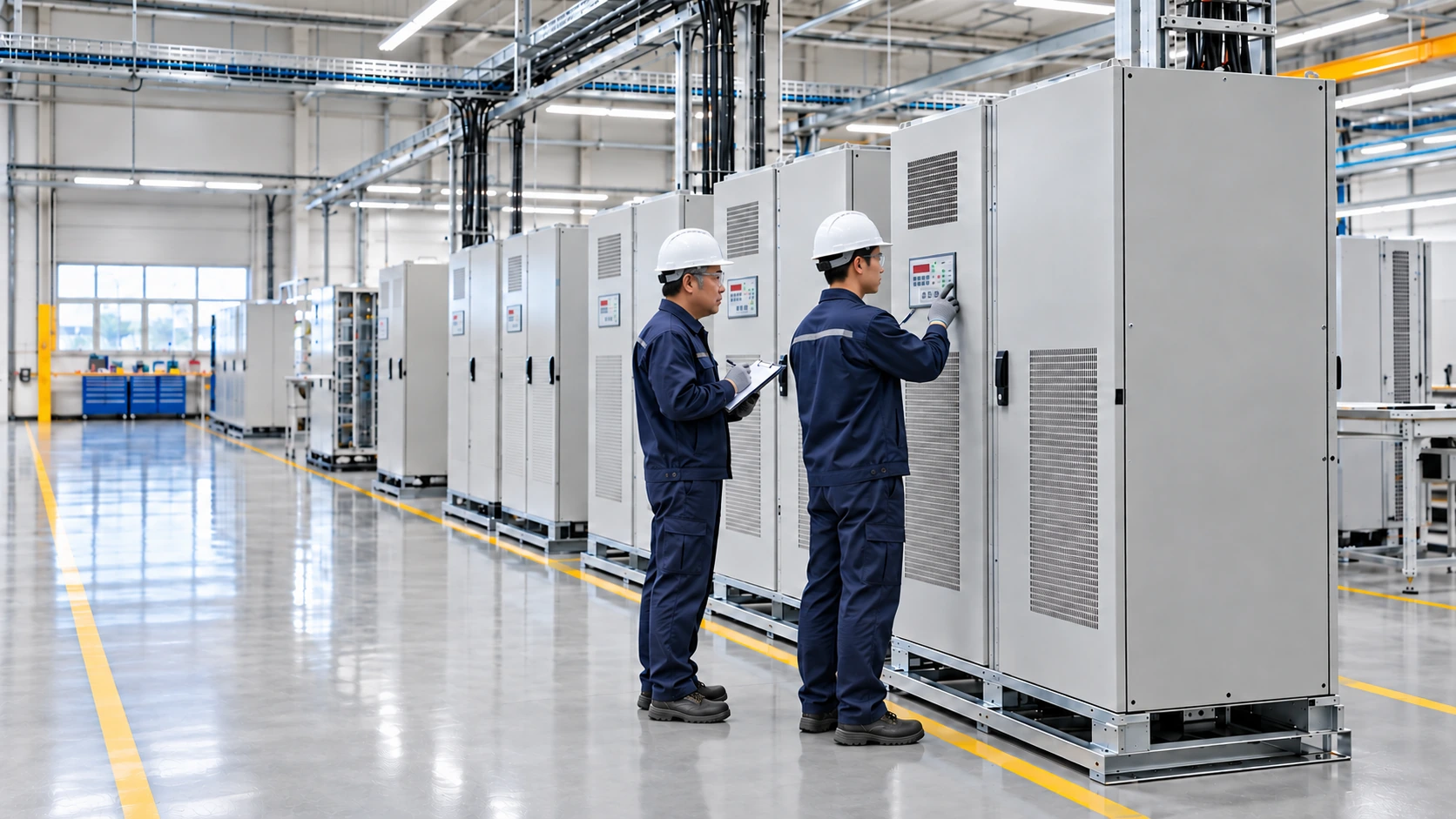
Production work is organised around approved drawings, component verification, controlled assembly and inspection hold points. Work areas are kept orderly, tools are suitable for the task, lifting and material movement are planned, and electrical work is performed only by trained personnel.
- Incoming inspection and component traceability.
- Controlled wiring, torqueing, earthing and polarity checks.
- Guarding, safe access and lockout/tagout where energy sources are present.
- PPE, housekeeping, lifting aids and clear emergency arrangements.
- Non-conformance reporting, corrective action and lessons shared with production teams.
03 · FAT and site execution
Verify before delivery; control risk at site
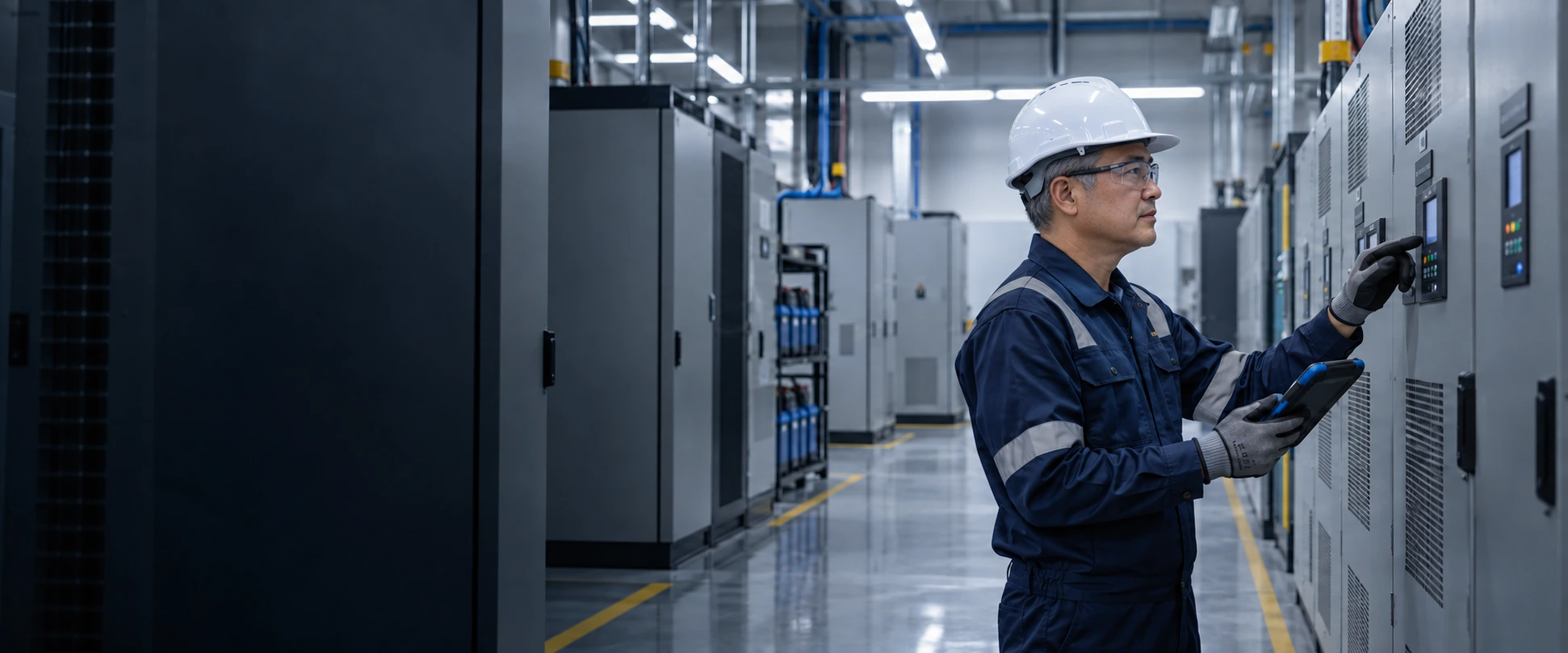
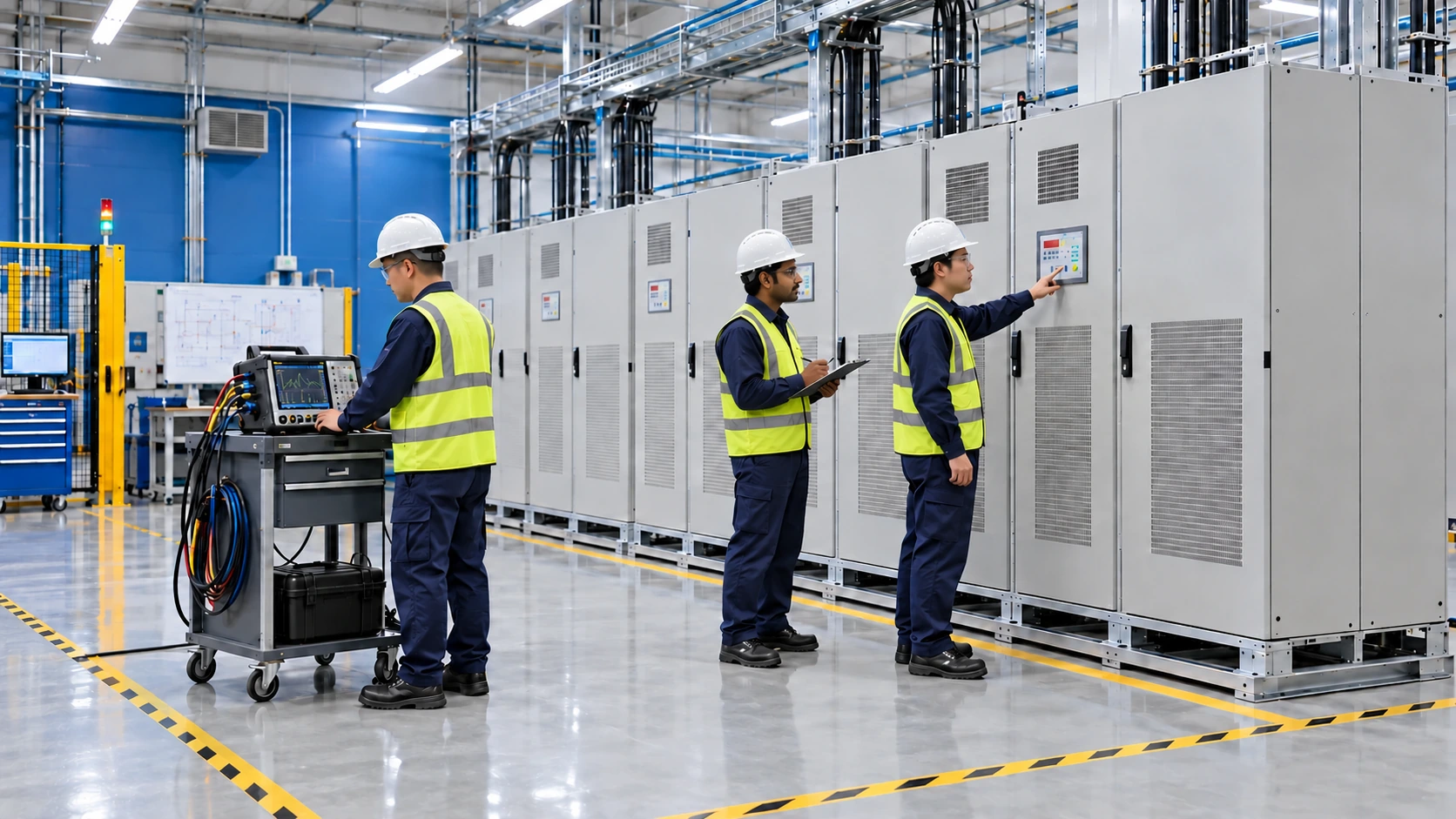
Factory acceptance testing is performed in accordance with the applicable IEC standards and the approved project test procedure. It checks the agreed functions, alarms, indications, protection, operating modes and interfaces before equipment leaves the factory. Test boundaries, energisation steps and emergency actions are defined so testing is repeatable and controlled.
All factory punch-list items are recorded, corrected and formally cleared before dispatch wherever possible. Closing these items at the factory prevents avoidable rework at site, gives the installation team a verified starting point and supports safer, faster installation and commissioning.
Before installation and commissioning, the site team reviews access, lifting, cable routes, isolation points, battery hazards, interfaces and permit requirements. Commissioning proceeds through documented stages: visual inspection, mechanical completion, insulation and continuity checks, controlled energisation, functional testing, load checks and customer handover.
04 · Service and continuous improvement
Safety continues after commissioning
Service activities begin with equipment identification, operating-state confirmation, risk assessment and isolation planning. Technicians use approved procedures, insulated tools and suitable PPE, and record findings that may affect future maintenance. Recurring defects, near misses and field observations are reviewed so product design, manufacturing instructions, training and service procedures can be improved.